
LIFE heritageHOME – a roadmap to a more energy-efficient heritage home
In its long-term strategy for the reconstruction of buildings, Estonia has established the ambitious target to completely reconstruct the building stock built before 2000 to energy class C by 2050. However, under the current Building Code, minimum energy performance requirements are not applied to listed buildings and buildings designated as being of cultural and environmental value, the character or appearance of which would be significantly altered by compliance with these requirements. At the same time, higher thermal performance, a better indoor climate and lower heating costs are objectives that are equally important to achieve in these buildings, in order to create a modern, comfortable, energy-efficient and affordable living environment – but in a way that would respect the historical and architectural value of these buildings.
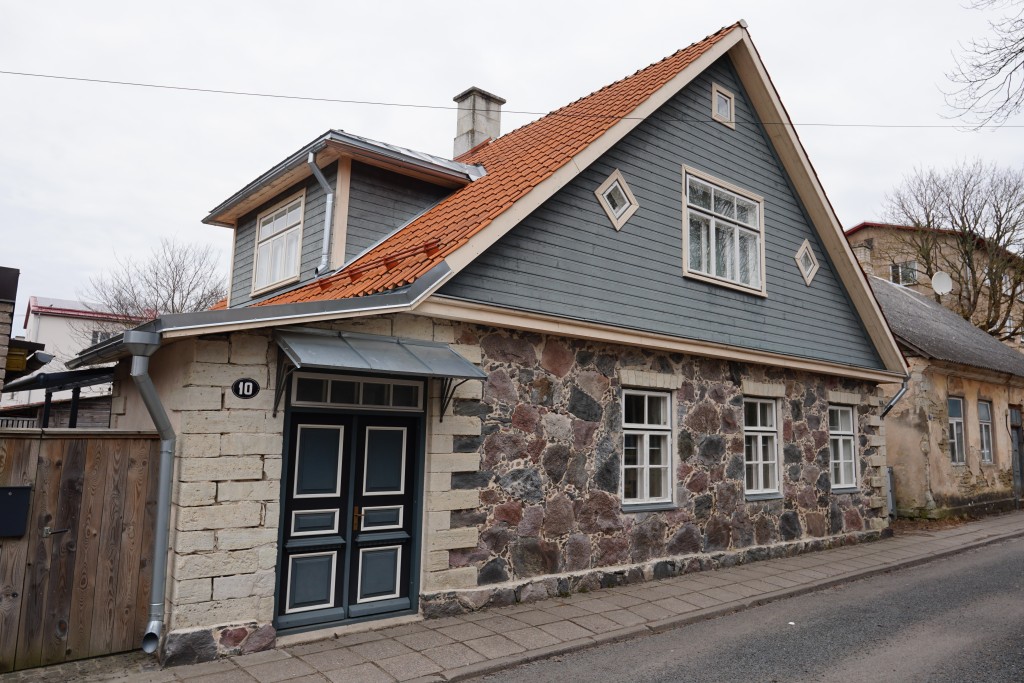
It is from this dual ambition that LIFE heritageHOME proceeds from – a three-year research and development project (2023-2026) with the aim of contributing to the renovation and energy efficiency improvement of listed buildings, i.e. ‘heritage homes’ located in heritage conservation areas and declared as monuments. It serves as a sister project for the major research and development project LIFE IP BuildEST supporting the implementation of the National Building Renovation Plan and focuses more specifically on residential buildings of cultural value.
The main beneficiaries of the project will be the owners of these listed buildings and other buildings of cultural value, with whom the development of the necessary solutions, testing and feedback are planned. To this end, the project partners Estonian Academy of Arts and the National Heritage Board invited homeowners to participate in co-creation workshops on “How to contribute to the renovation of heritage-listed residential buildings?” held in Pärnu, Tartu and Tallinn in November 2024.
Renovation of heritage homes intersects different values
Improving the energy efficiency of their homes is a topical issue for owners of heritage buildings because of the ‘cold rooms’ and high heating costs on the one hand, which make living in these houses uncomfortable and expensive. On the other hand, this is a concern in terms of finding construction and engineering solutions for renovation that comply with heritage conservation requirements and ensuring financing options – whereas renovation grants and loans in some cases include energy efficiency improvements as one of the conditions for financing, the desired energy savings may not be possible for buildings of cultural value due to the restrictions and requirements imposed to protect these values. At the same time, some owners perceive the modernisation and energy efficiency improvement of buildings as a pressure to modernise historical buildings of cultural value, and thus a threat to the preservation of their original character.
Thus, for homeowners, the aim of a ‘(more) energy-efficient heritage home’ implies a certain conflict or contradiction between the preservation of cultural values and the efforts to improve energy efficiency, raising a number of questions. For example, what are the possible ways to improve the thermal insulation of historical buildings of cultural value and save on energy costs? In the drive to improve the energy efficiency of residential buildings, what will happen to ‘old houses’ and their (restored) historical stoves, windows and doors, for example? Who and where is handling energy efficiency matters and advice on buildings of cultural value in the first place?
The expectation of owners is therefore to have commonly agreed principles on how to improve the energy efficiency of heritage buildings in a way that respects and preserves their values, and to recommend renovation solutions that comply with these principles and provide financial support for owners.
Support needed for the renovation process
The suggestions of the homeowners who participated in the workshops for resolving the issues encountered during the renovation journey can be summarised as ‘one place, one person’. This means that all the information needed to renovate listed buildings should be easily found in a single information portal, or ‘one place’, and that there should be a multi-disciplinary advisor(s), or ‘one person’, from whom owners can get personalised advice and support for renovating their building. Owners’ expectations can be seen as two complementary solutions – an online information environment and an owner-centric advisory service.
The proposed solutions would, on the one hand, help resolve the problems that owners have faced with regard to a lack of information, its fragmentation, or the difficulty finding it. On the other hand, owners wish to receive central advice and support on the technical solutions suitable for renovating their buildings of cultural value, including energy efficiency improvement possibilities and the preparation of a renovation plan, as well as on the administrative aspects of the renovation process.
While the development of a comprehensive consultation portal and an owner-centred advisory service will be central to the project’s work plan for this year, an owner-driven heritage home renovation roadmap is already available on the website of the National Heritage Board, along with comprehensive guidance and explanations.
How does one go from ‘bit by bit’ renovation to a fully renovated home?
One of the bottlenecks raised in the workshops was, as expected, the financing of the renovation of listed buildings. Renovation of heritage buildings is generally significantly more costly due to the conditions and restrictions of heritage protection. At the same time, listed buildings and other buildings of cultural value rather tend to be smaller (apartment) buildings, where relatively higher renovation costs are borne by fewer owners. However, the current support measures do not take this into account and are not proportionate to the values attributed to these buildings, according to the owners.
One of the drawbacks of renovation and restoration subsidies, both from national heritage protection and from local authorities, is that from the point of view of the owners, the subsidies are ‘fragmented’, i.e. financial support is provided for the renovation or restoration of one or another structure, part or element of a building, rather than for the renovation of the whole building. In other words, such subsidies allow or encourage the renovation of parts of the building, or ‘bits and pieces’, which may not take into account the needs of the building as a whole and may also create a number of other problems for owners. According to the owners, the conditions of the KredEx reconstruction grant, which supports the comprehensive renovation of residential buildings, may not be equally suitable for residential buildings of cultural value, and several bottlenecks are seen in applying for the grants.
What will happen to the proposals made in the workshops?
One of the key areas of work in the project is to identify gaps in legislation and inconsistencies between different pieces of legislation, and to improve inter-agency cooperation. Feedback from owners has highlighted a number of issues and aspects that need to be considered and addressed. Issues and topics raised in the workshops will also be taken into account when organising training and seminars for homeowners. In addition, an analysis of support measures will be carried out in order to enhance existing financing opportunities and to identify additional financing opportunities to support the renovation of heritage homes.
Last year’s analysis of the so-called best practices in renovating listed buildings and improving their energy efficiency will be published soon, and demo videos will be available this year to introduce them. The Green Transition Charter on Historical Buildings will also be finalised this year in cooperation with experts in the field as a step towards harmonising cross-sectoral knowledge on the role and potential of heritage buildings within the context of the climate crisis.
By the end of 2025, a vision for a comprehensive renovation advisory service will be completed, with the piloting of the service itself planned for 2026. One of the central elements of the advisory service will be a digital environment that will bring together the information and data that homeowners need to renovate their homes.
Renovating a single house is generally a complex, time-consuming and expensive undertaking. Owners generally want to renovate their homes well and properly. In doing so, we will try to find ways to ensure that the investments made in heritage homes today make sense in the long term and help preserve these houses as our common heritage.

The project is co-funded by the European Union. Views and opinions expressed are however those of the author(s) only and do not necessarily reflect those of the European Union or CINEA. Neither the European Union nor CINEA can be held responsible for them.

