
“Intangible cultural heritage plays a unifying role for communities, especially in difficult times. The intangible heritage list, which helps introduce our special traditions, knowledge and skills to the wider world, incorporates the phenomena that are alive as well as inherent and important to people as a part of their daily lives and identity. I would like to congratulate our Mulgi and Ukrainian communities who have worked hard so that these traditions – passed down from one generation to the next while remaining strong to this day – could reach the international UNESCO hall of fame,” said Heidy Purga, Minister of Culture.
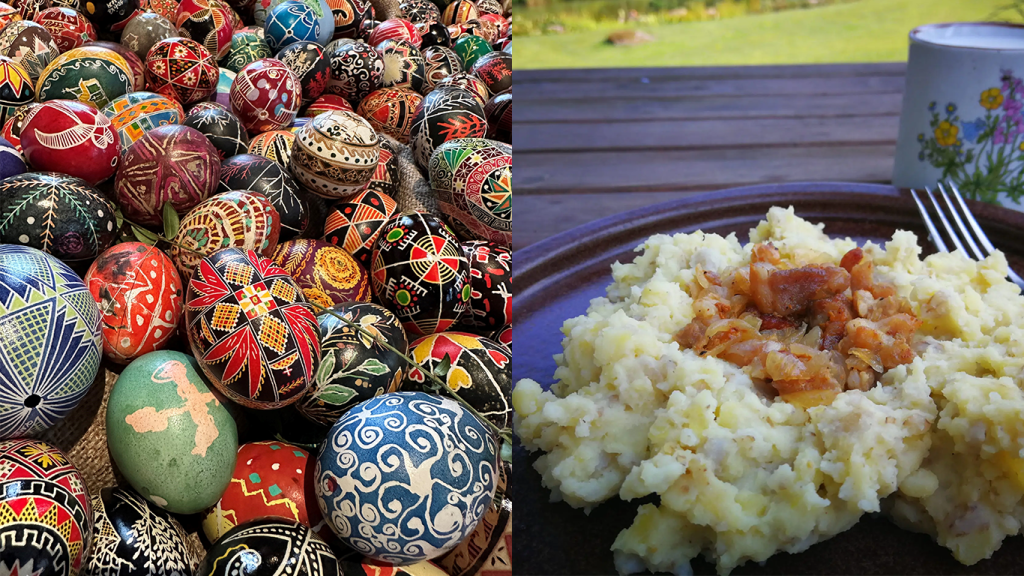
The pysanka is a Ukrainian Easter egg decorated in the batik method. In order to prepare the pysanka, a traditional pattern is drawn on the egg with a special stylus, and the egg is then placed in a dye bath. The decorations, written in wax, make use of ornaments and traditional national patterns, with each having its own meaning.
Personal wishes and messages are communicated with pysanka symbols. These eggs are not meant to be eaten; they are put aside for safekeeping instead. The majority of pysanka eggs are made during Easter. The eggs are often taken along to church in order to have them consecrated and then brought home or given as a gift after the service. In addition to Easter, the eggs are given as a gift for major life events such as the birth of a child, baptism and marriage. Pysanka eggs are also taken to the graves of departed relatives.
The pysanka tradition continues to live on in wartime, unifying Ukrainians all over the world. In addition to other decorations, women adorn psysanky with protective symbols, for example the infinity symbol and the tree of life, for their men and sons taking part in the war. Estonia and Ukraine jointly submitted the application for adding this tradition of decorating Easter eggs to the list.
Mulgi puder is a potato and groat mash with traditional additions that originates from Mulgimaa in Southern Estonia and is named after the region. By the last quarter of the 19th century, the tradition of preparing Mulgi puder had spread widely throughout Estonia. Only domestic raw materials are used for making the mash based on the original recipe. The tradition of preparing and eating the mash is passed down in the family from generation to generation, but additionally, a Mulgi puder workshop is an inseparable part of Mulgi language learning in schools and hobby groups and it serves as a staple food in the institutions and public events of the region.
Hundreds of members of the Mulgi community and several village associations, schools and NGOs from the region gave their support for adding Mulgi puder to the list. Further information about Mulgi puder is available in the Mulgimaa information portal.
Kihnu cultural space, the tradition of Estonian, Latvian and Lithuanian song and dance celebrations, the Seto leelo singing tradition and the smoke sauna tradition in Võromaa have already been added to the UNESCO Representative List of the Intangible Cultural Heritage of Humanity. The building and use of expanded dugout boats (haabjas) is included in the List of Intangible Cultural Heritage in Need of Urgent Safeguarding.

